



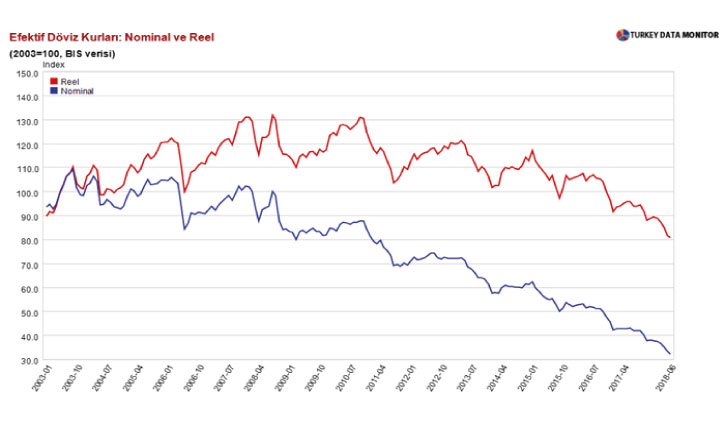
What Are Exchange Rates? Foreign exchange rates, often referred to as forex or FX rates, represent the value of one country’s currency in terms of another country‘s currency. These rates play a crucial role in the global economy, influencing international trade, investment, and financial transactions.

1. Introduction to Foreign Exchange Rates:
Foreign exchange rates indicate the relative value of currencies and are expressed as a ratio between two currencies. They determine the amount of one currency needed to purchase a unit of another currency. For example, if the EUR/USD exchange rate is 1.20, it means one Euro can be exchanged for 1.20 U.S. Dollars.
2. Importance of Foreign Exchange Rates:
- International Trade: Exchange rates impact the competitiveness of a country’s exports and imports. A weaker currency can make a country’s exports more attractive, while a stronger currency can make imports more affordable.
- Investment: Investors analyze exchange rates to make informed decisions about international investments. Currency values affect the returns and risks associated with foreign assets.
- Monetary Policy: Central banks use exchange rates as a tool for implementing monetary policies. By influencing interest rates and money supply, they aim to stabilize inflation and support economic growth.
3. Types of Exchange Rates:
- Spot Exchange Rate: The rate at which currencies are traded for immediate delivery, typically within two business days.
- Forward Exchange Rate: Agreed-upon rates for a future date, allowing parties to hedge against currency fluctuations.
4. Notation of Exchange Rates:
- Exchange rates are commonly expressed in pairs, where the first currency is the base currency, and the second is the quote currency. For example, in the USD/JPY pair, the U.S. Dollar is the base currency, and the Japanese Yen is the quote currency.
5. Factors Influencing Exchange Rates:
- Interest Rates: Higher interest rates in a country can attract foreign capital. Increasing demand for its currency and raising its value.
- Economic Indicators: GDP growth, unemployment rates. Inflation influence currency values as they reflect the overall economic health of a country.
- Political Stability: Political events and stability impact investor confidence. Affecting the perceived value of a currency.
- Trade Balances: Surpluses or deficits in trade influence currency strength. A trade surplus may strengthen a currency, while a deficit may weaken it.
6. Exchange Rate Mechanisms:
- Floating Exchange Rates: Determined by market forces of supply and demand.
- Fixed Exchange Rates: Set and maintained by governments or central banks.
- Managed Float: A combination of market forces and government intervention.
7. Currency Exchange Market:
- The forex market is a decentralized global marketplace where currencies are traded. It operates 24 hours a day, five days a week.
Understanding foreign exchange rates is essential for businesses, investors. Policymakers as they navigate the complexities of the global economy. The continuous monitoring of exchange rates provides valuable insights into economic conditions. Helps facilitate international financial transactions.
Click For More Information!!



