



For humanity, weather degradation is the result of a series of events that have been growing in origin at different times and in various countries. But the modern space age began in the early 20th century. Particularly with the space races of the Soviet Union and the United States.
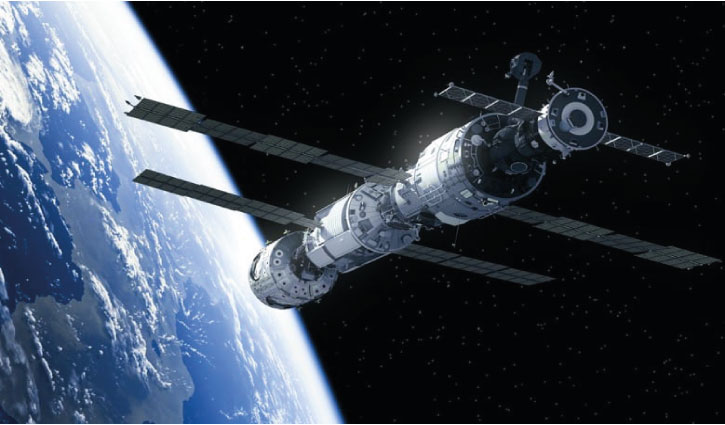
The First Space Exploration: How and When Was It Done?
The beginning of the space age is marked by a series of events that occurred in the latter half of the 20th century. One of the most significant events among them is the launch of the first artificial satellite, Sputnik 1, by the Soviet Union on October 4, 1957. Was the first artificial satellite to be placed in orbit around the Earth, and it represents a major milestone in the history of space exploration.
Sputnik 1: Humanity’s First Step into Space
Sputnik 1 was designed and manufactured by a team led by Sergey Korolyov. It was approximately 58 cm in diameter and weighed about 83 kg. The satellite orbited the Earth, transmitting radio signals as it circled the globe. Sputnik 1’s ability to orbit the Earth every 96 minutes demonstrated that space was accessible to human-made devices and marked the beginning of the space age.
Yuri Gagarin and Manned Spaceflights
Space exploration took another leap forward on April 12, 1961, with the launch of Soviet cosmonaut Yuri Gagarin aboard the Vostok 1 spacecraft. Gagarin became the first human to travel into space. This historic flight proved that humans could journey into space. Propelled the Soviet Union to the forefront of the space race.
- Advertisement -
America’s Response: NASA and the Mercury Program
In response to the Soviet Union’s success. United States developed its own manned space program. NASA’s Mercury program began with the launch of the first American astronaut, Alan Shepard, in 1961. This program laid the foundation for manned spaceflight. Paved the way for the subsequent Apollo program.
The Development of Space Exploration and Subsequent Steps
The first space exploration sparked humanity’s desire to venture further into space. Uncover the secrets of deep space. It was followed by a series of events and missions. Including landing on the Moon (Apollo 11), establishing space stations (International Space Station). Sending rovers to Mars, and missions reaching beyond the Solar System into deep space.
Exploration has not only advanced scientific research but also contributed to technological developments. Space research has pioneered innovations in communication. Information technology, materials science, and many other fields, contributing to humanity’s overall progress. Space remains a frontier filled with unexplored mysteries. Efforts to expand humanity’s presence and exploration in space continue.
Click For More Information!!!



