




Block Chain: Blockchain is a decentralized ledger technology that securely records. Links data in encrypted blocks. Each block contains data. A unique identifier (hash) of the previous block, creating an unchangeable chain. This technology ensures secure, transparent, and tamper-resistant storage of information.
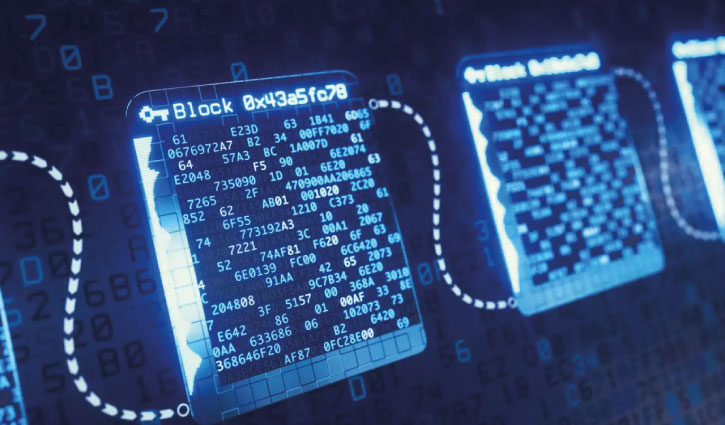
How Does Blockchain Work?
- Adding New Information (Mining): Participants in the blockchain network (miners) solve complex mathematical problems to add a new block. Often utilizing Proof of Work (PoW) or Proof of Stake (PoS) consensus algorithms, confirms the legitimacy of the block.
- Confirmation and Linking of Blocks: The solved problems confirm the addition of a new block. It gets linked to the previous one using the hash of the previous block.
- Updating Distributed Copies: Since all participants have a full copy. Blockchain is updated simultaneously, ensuring consensus among all nodes.
Blockchain Applications:
- Cryptocurrencies:
- Bitcoin (BTC): The first cryptocurrency, Bitcoin, uses blockchain to enable decentralized transactions without a central authority.
- Ethereum (ETH): Ethereum is a blockchain platform supporting smart contracts. Self-executing programs that run on the blockchain.
- Financial Sector:
- Cross-Border Payments: Blockchain can expedite cross-border transactions, making them faster and more cost-effective.
- Trade Finance: It enhances transparency and reliability in trade finance processes.
- Healthcare:
- Data Security: Blockchain can securely store and share patients’ medical data.
- Drug Traceability: It aids in tracking the supply chain of pharmaceuticals for enhanced safety.
- Smart Cities and IoT:
- Energy Management: In smart cities, blockchain can optimize energy consumption and distribution.
- Traffic Management: It can monitor and optimize traffic flow.
- Supply Chain and Food Safety:
- Supply Chain Tracking: Blockchain enables transparent tracking of the supply chain for products like food and pharmaceuticals.
- Food Safety: It enhances food safety by tracking sources and ensuring authenticity.
- Voting Systems:
- Transparency and Reliability: Blockchain can make voting processes more transparent and reliable.
- Real Estate Sector:
- Property Records: Blockchain can securely store and manage property ownership records.
- Insurance Sector:
- Claims Processing: Blockchain can streamline and authenticate the management of insurance claims.
Blockchain holds the potential to provide security, transparency. Efficiency across various industries, enabling more trustworthy and automated processes. However, it still faces challenges, including technical, legal, and regulatory considerations.
Click For More Information!!